
The Role of Astrobiology in Space Missions

Today’s chosen theme: Role of Astrobiology in Space Missions. Step into a frontier where questions about life shape launch windows, payloads, and even the way we handle a single grain of planetary dust. Subscribe and stay curious as we explore how astrobiology guides every decision from blueprint to touchdown.

From Big Questions to Flight Plans

Astrobiology frames testable hypotheses—such as detecting chemical energy gradients or organic molecules—then maps them onto instruments, power budgets, and operational timelines. Curiosity becomes code, checklists, and a rover wheel carefully tracing a river delta’s ancient edge.

From Big Questions to Flight Plans

Mission teams build a traceability matrix linking big astrobiology goals to measurable observations. This tool aligns cameras, spectrometers, drills, and sampling strategies so every watt and byte advances the search for evidence of life.

From Big Questions to Flight Plans

Public comments and citizen expertise influence targets and priorities, from Mars deltas to ocean-world flybys. Share what you want explored next so our astrobiology questions become tomorrow’s funded instruments and flight trajectories.

Hunting Biosignatures: Tools and Tactics

Patterns of isotopes, complex organic molecules, cell-like morphologies, or atmospheric disequilibria can suggest life. Astrobiology demands multiple lines of evidence, because chemistry and geology sometimes mimic biology’s fingerprints.

Hunting Biosignatures: Tools and Tactics

Raman spectrometers, gas chromatograph–mass spectrometers, microscopes, and laser-induced breakdown systems scan rocks, regolith, and vapors. Each tool targets a piece of the biosignature puzzle, building a mosaic of possible life indicators.

Planetary Protection and Ethics

Why COSPAR Categories Matter

Forward contamination could seed another world with Earth microbes, while back contamination risks bringing unknown biology home. COSPAR guidelines set sterilization, cleanliness, and access rules tailored to each mission’s astrobiology potential.

Sample Return: Extreme Care, Real Stories

Apollo astronauts spent weeks in quarantine. Today, cleanrooms and biosecurity protocols protect OSIRIS-REx and future Mars samples, preserving purity for science while safeguarding Earth’s biosphere from hypothetical hazards.

Ethics Beyond Checklists

Astrobiology urges humility: if life exists elsewhere, it has intrinsic value. Add your voice to public forums on exploration rights, indigenous planetary protection, and how to responsibly share discoveries that could reshape humanity’s worldview.

Case Studies That Changed the Playbook

The Viking landers performed groundbreaking life detection experiments on Mars. Chemistry likely drove their puzzling results, teaching astrobiology to demand contextual geology, multiple instruments, and robust controls before claiming biology.

Case Studies That Changed the Playbook

Perseverance’s carefully selected, sealed samples prioritize fine-grained rocks and delta sediments. Astrobiology informed every step, aiming to return materials that could preserve fragile organics and microbial textures for Earth laboratories.
Complementary Strengths in the Field
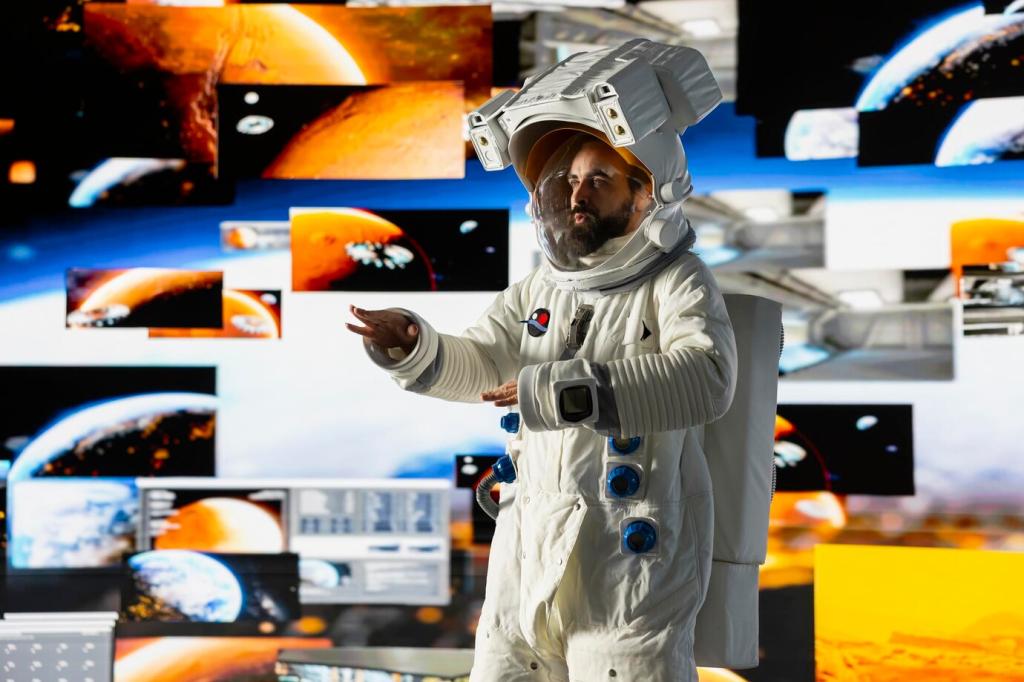
Robots endure radiation, vacuum, and cold; people adapt quickly, spot patterns, and improvise. Astrobiology combines both, using robots to scout and humans to conduct careful, context-rich sampling with strict contamination controls.
Bioburden and Crew Protocols
Human missions must minimize microbial shedding and hardware bioburden. Astrobiology guides suit design, habitat air handling, sterilization workflows, and sampling choreography so we do science without seeding sensitive environments.
Be Part of the Mission Ethos
Tell us how you would balance human exploration with astrobiology safeguards. Your ideas can inspire training scenarios, operational norms, and public engagement that keep the science honest and the wonder intact.
Mamaparfum
Privacy Overview

This website uses cookies so that we can provide you with the best user experience possible. Cookie information is stored in your browser and performs functions such as recognising you when you return to our website and helping our team to understand which sections of the website you find most interesting and useful.